Which Game Engines Let Musicians Build and Ship Games Without Touching Code
No-code engines let musicians ship games by handling logic they can't code themselves.
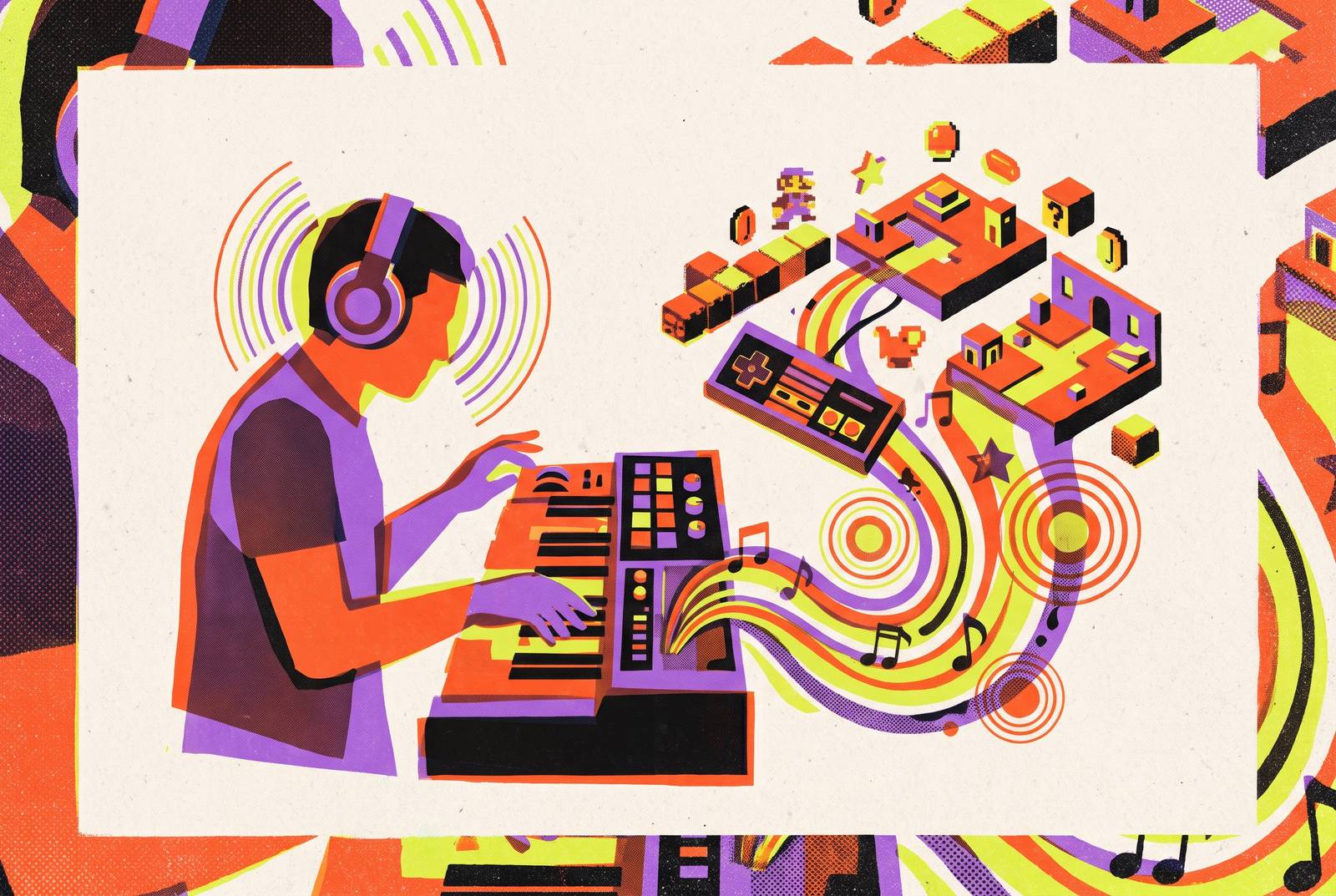
Visual logic engines let musicians and composers build games without writing code, and AI-native engines can also take care of the logic layer inside the project. For a game intended for sale, the decisive requirements are an owned project, an exportable build, and a real publishing path. The right choice supplies the runtime musicians lack without taking control of the finished work.
What musicians already bring to game development, and what they're still missing
Compositional structure maps directly onto level design because both put tension and release in order over time. A musician’s choice to introduce a drop or hold silence draws on the same pacing judgment that shapes player energy and difficulty. Emotional arc transfers just as clearly. An intro, build, climax, and resolution provide a structure for narrative progression, while a producer’s decision to call a mix finished resembles the ship-or-polish judgment facing a solo developer.
Musicians still need a runtime to interpret rules and turn them into interactive behavior in real time. That is a precise technical gap. Musicians already work above that machinery in a DAW without needing to know how the operating system renders audio. In the past, game development has made creators work more closely with code, physics, and scene graphs before they could work at the design layer. No-code tools can remove that prerequisite, provided they support production through delivery.
Why "no-code" means radically different things depending on which tool you pick
The no-code label covers at least three distinct approaches in 2026, which are AI-driven generation, visual logic systems, and drag-and-drop builders. AI-driven generation turns a plain-English description into a playable result without requiring the creator to assemble logic. Visual logic systems instead let creators connect conditions and actions through event sheets or node graphs. Drag-and-drop builders focus on placing objects, choosing predefined behaviors, and changing settings. These are different ways of controlling a game.
The distinction is where the work goes. Visual logic removes syntax but leaves the creator responsible for rules, while a drag-and-drop builder confines much of that work to available behaviors. AI generation delegates more construction, though the creator’s control depends on what the platform exposes. Within that approach, an AI agent operating inside an editable project differs from a service that returns only a playable result. The comparisons that follow use these categories to distinguish prompt-generated prototypes, manually assembled visual logic, and AI-assisted production inside an engine.
The finish line that separates a real engine from a prototype generator
“Done” needs a distribution target. A hosted browser prototype does not establish that its creator can download an offline build, submit it to Steam, or take possession of the underlying project. The relevant distinction is between access to a playable result and ownership of a product that can be packaged, priced, and distributed.
To evaluate that distinction, a musician should check whether the engine exports beyond HTML5 to Windows, macOS, Linux, Android, or iOS. Project ownership needs a separate check because an exported build and an editable project are different deliverables. Platform terms also affect the commercial outcome. Steam takes a share of net revenue on a sliding scale based on lifetime gross, while itch.io lets creators set their own revenue split and use pay-what-you-want pricing without having to pay a platform fee. Where AI disclosure is required, it belongs in the publishing checklist from the start so the creator is prepared at submission.
Prompt-to-game tools: fast on-ramp, hard limit for anyone who wants to ship
A musician can describe a rhythm mechanic and receive a working prototype in minutes without building logic or wiring assets. That makes this tier a good fit for early validation and for testing ideas in a game jam. The prototype answers a design question before the creator commits to production. Speed has genuine value at that stage.
The constraint appears when validation becomes a plan to ship. Most tools in this tier optimize for 2D browser play, while desktop or console export, deep custom logic, and project portability are unavailable or severely constrained. A promising prototype may therefore require rebuilding elsewhere. For a musician targeting Steam, a browser-only tool can serve as a sketchpad, but it cannot serve as the primary production engine. Its usefulness depends on accepting that boundary before investing in the prototype as though it were the final project.
Visual logic engines: genuine no-code power for 2D, with trade-offs musicians should weigh
Visual event systems replace written syntax with explicit conditions and actions. They support substantial mechanics, including wave spawners, upgrade trees, and inventory systems, while most tools in this tier offer desktop, mobile, and HTML5 exports. However, the creator must still understand if/then reasoning, state management, and trigger conditions, so the absence of compiler errors does not remove the need to think systematically.
Musicians have a useful foothold in that work because arrangement already involves rules about what happens, when it happens, and what changes around it. An event system makes those relationships explicit. Creators also have to get assets from elsewhere, since art and audio must come from outside the logic tool. For a QA engineer without coding skills, this tier is a direct way to set conditions and test the behavior they lead to without writing syntax. It particularly suits musicians who enjoy systematic thinking and are willing to spend time on the logic layer.
AI-native engines that live inside the project: the tier closest to what musicians actually need
An AI agent inside the project removes a different obstacle from a separate chat assistant. In the separate-window arrangement, the creator must copy output into the engine, connect it to the project, and resolve mismatches. Those handoffs demand technical judgment of their own. An integrated agent can instead create nodes, attach scripts, connect signals, run the game, and read errors within the environment where the result must work.
That setup is like an instrument already loaded into a DAW session. The creator directs a change and evaluates the result without first translating material between disconnected tools. For musicians, this is the closest fit to working at the design layer while another system handles implementation. Integration alone is insufficient, however. The underlying engine must still produce owned, exportable builds rather than confining the result to a hosted demonstration.
For a musician choosing this tier, the additional checks are project portability and the scope of the asset pipeline. Compatibility with an established scripting ecosystem leaves room for a technical collaborator or for learning code later. A subscription that brings these services together can also cut the work of managing separate services for code, images, audio, and publishing. These production requirements need checking in any engine carrying the AI-native label. A tool earns this position by joining assistance to a usable project.
Assembling the asset pipeline: what musicians already own and what they still need to source
Audio is one of the most expensive and time-consuming asset categories for an indie game, and musicians can supply much of it themselves. A creator who composes the soundtrack and makes sound effects has already covered a substantial production task. The remaining gap is more specific than “all the assets.” It includes visual assets such as 2D sprites or 3D models, parts of the interface, and any dialogue or voice acting.
Asset selection must also fit the chosen engine’s import workflow. Clean, low-poly GLB models can work in 3D workflows that support them, and dedicated sound-effects generation can add to what a creator who focuses on music makes themselves. Rights need equally deliberate attention. For externally generated audio, the practical choice is a tool trained on licensed data that clears outputs for commercial use, rather than treating unresolved litigation as irrelevant to a commercial release. Generated music and sound effects also warrant cross-checking against existing libraries because content-matching false positives can complicate delivery, and any required AI disclosure should include those assets.
How a musician should structure their first build to reach a shippable state
For a first build, the useful model is a recording session. The musician should reduce the concept to one sentence containing the player’s action, the win condition, and one mechanic before opening the engine. This is the equivalent of establishing a song concept before opening the DAW. The closest available template provides a session to revise. A small change such as “change the character to a wizard” gives AI a narrower task than “build a platformer.”
The same production discipline applies to feedback. Musicians should prompt outcomes, using “the jump feels floaty, make it snappier” to describe the intended feel and leaving implementation details such as “set gravity to 20.” to the engine. That resembles directing a mix by describing the intended feel. Movement and one interactable form the tracking phase, while win and lose conditions supply the arrangement. Clarity and audio polish belong to the mix, and packaging the build is the master-and-deliver stage. Each phase needs something playable that does its small part of the job correctly.
A game jam deadline can act as a delivery date for musicians who tend to keep revising. Its AI policy needs reading before production choices become commitments. Replacing AI art before submission is appropriate only when the rules limit the assets submitted and allow AI use during development. For the first release, itch.io offers same-day publishing without a mandatory fee and with pay-what-you-want pricing available. Steam is the later step once the game is polished and the creator wants the larger PC audience.
The honest objection: AI tools in game development carry real trade-offs worth knowing
The GDC 2026 survey presents a divided professional industry, with a majority reporting unfavorable views of generative AI’s overall impact. Visual and technical art, game design and narrative, and programming are among the most skeptical groups. Their concerns deserve serious attention. These are also the roles that generative systems are positioned to assist or replace, so claims of easier production cannot be separated from questions about professional work.
The survey also places professional usage more heavily in research, brainstorming, and code assistance than in final assets or player-facing features. That distinction limits what productivity claims establish. Faster scaffolding does not prove that the finished game is better, and making content does not settle whether it belongs in the work. A non-coder filling a technical gap is in a different position from someone replacing a person already in a professional role, but licensing and creative responsibility still matter. AI supplies construction help rather than artistic judgment, which leaves musicians’ strongest skills central to the result.
Which engine tier should a musician choose to finish and ship a game?
For testing an idea in an afternoon and sharing a browser link, prompt-to-game tools are the appropriate fit. The creator should treat the result as validation, with its potential to become the product still unproven. Visual logic is a way to build a complex 2D game for itch.io or mobile. That choice rewards willingness to spend weeks learning event-based thinking. It also fits a QA engineer who wants direct control over conditions and behavior without code syntax.
For a complete, owned game intended for Steam or itch.io, an AI-native engine is the closest fit when the creator wants assistance with both logic and assets. The qualifying requirements are real build export, project ownership, and an agent operating inside the engine. If later collaboration or scripting is part of the plan, an established ecosystem and a portable project become additional selection criteria. The feature list is secondary to that destination. Musicians already know how to shape an experience and decide when it is finished, and the engine’s job is to make that judgment deliverable.