AI Coding Tool Accuracy on Multiplayer Netcode in Godot
Godot 4 netcode bugs from AI assistants fail silently, so testing must change.
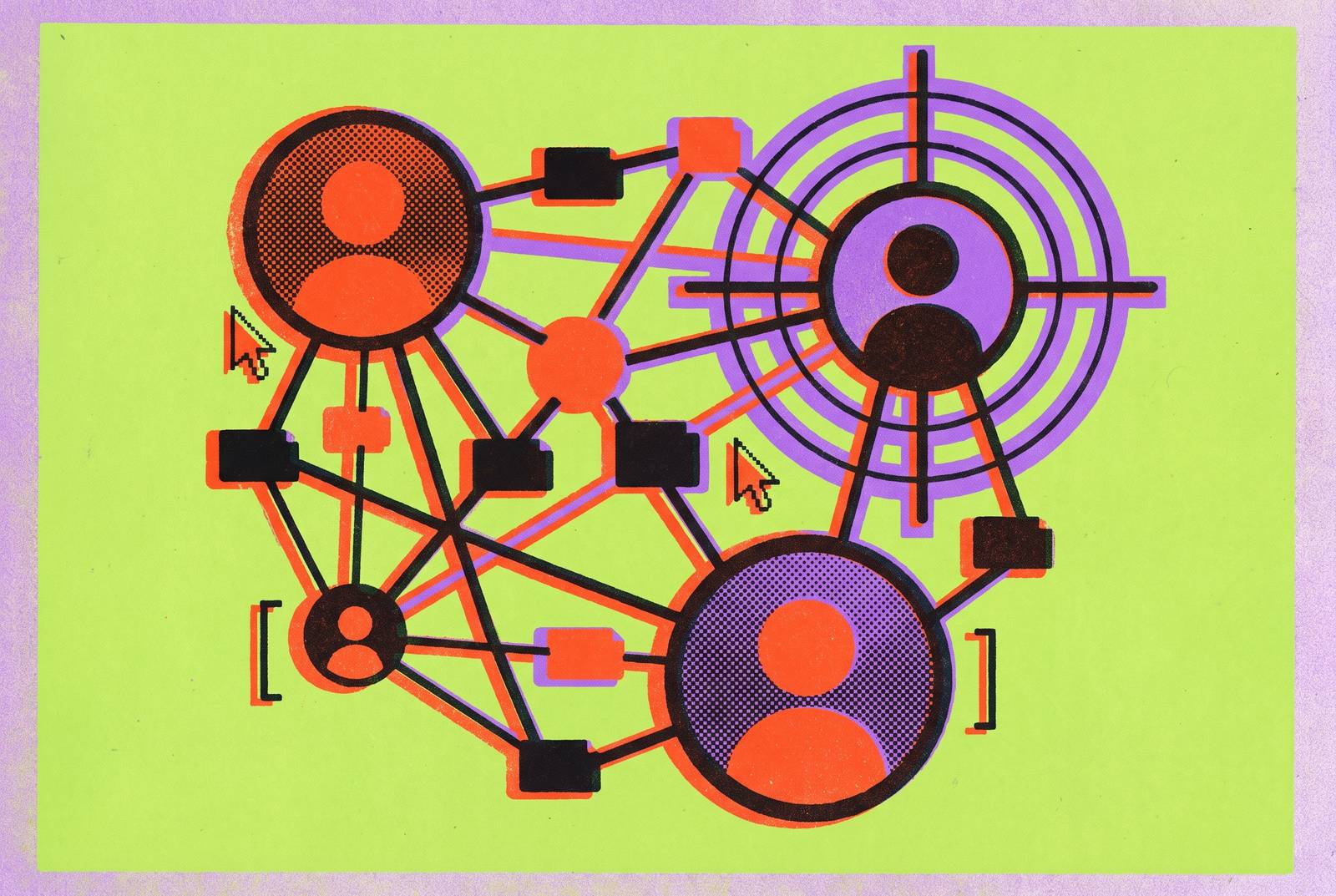
Godot 4's high-level multiplayer API is a complete rebuild of Godot 3's design, and that rebuild sits at the exact point where AI coding assistants make their worst mistakes on GDScript. An AI coding assistant that understands GDScript without constant corrections has to clear a specific bar on netcode: it has to know that MultiplayerPeer, MultiplayerSpawner, MultiplayerSynchronizer, and @rpc replaced an entirely different system, not an updated version of the same one. Most don't clear that bar reliably, and the failures that follow don't look like errors. They look like nothing happening.
Godot's multiplayer API as an unusually hard target for AI code generation
If a single-player movement script has a wrong class name, you get a visible bug. If the character floats or clips through a wall, or the editor throws a parse error, you fix it in minutes. Netcode doesn't work that way. The same category of mistake, an AI defaulting to Godot 3 conventions it absorbed in training, produces code that compiles cleanly, runs without warnings, and fails only when a second player joins over an actual network connection. That asymmetry is the premise for everything that follows: version drift in netcode is categorically more dangerous than version drift anywhere else in a Godot project, because its failures hide.
Part of the problem is data scarcity. GDScript already has a thinner training corpus than Python, JavaScript, or C#, and the corpus for multiplayer-specific GDScript is thinner still. The official documentation for the Godot 4 multiplayer stack is spread across a tutorial page and several separate class references (MultiplayerAPI, MultiplayerPeer, ENetMultiplayerPeer, MultiplayerSpawner, MultiplayerSynchronizer), so a model scraping forums and Q&A sites for netcode examples pulls in a mix of Godot 3 and Godot 4 answers with no clean separation between them. The volume of Godot 3 netcode sitting in those corpora doesn't help a model learn the domain. It actively misleads it, because Godot 3's networking model and Godot 4's don't map onto each other.
The Godot 4 redesign introduced a server-authoritative architecture: MultiplayerPeer handles the connection itself, MultiplayerSpawner replicates scenes that get created during play, MultiplayerSynchronizer streams ongoing state with per-property configuration, and @rpc-decorated functions handle one-off events like a jump or an attack. None of these four pieces has a direct Godot 3 equivalent. A model trained on a blend of both versions doesn't get a worn-but-usable mental model of Godot networking out of it. It has two incompatible mental models stacked on top of each other, and it has no reliable way to tell which one applies to a given prompt.
The three places version drift shows up in Godot 4 netcode
Version-drift errors in AI-generated Godot 4 netcode don't scatter randomly across a project. They cluster in three specific parts of the API, each with its own signature, which gives a developer three spots to check with particular care. The first cluster sits at the connection and movement layer. The well-known KinematicBody2D to CharacterBody2D rename catches models roughly half the time, meaning even when a model gets the class name right, it often still writes the old call signature, something like move_and_slide(velocity, Vector2.UP), which was correct in Godot 3 and is a compile-time parser error in Godot 4. The same contamination appears in session setup, where models trained on Godot 3 forum threads confuse yield with await and break any asynchronous handshake used to establish a network connection. These errors are at least loud: the parser rejects them, or the handshake visibly fails, so a developer finds out quickly.
The second cluster is quieter, and it's the one that matters most. The @rpc annotation takes up to four positional parameters, mode, sync, transfer_mode, and transfer_channel, and the mode parameter decides who is permitted to call the function: authority (the default, limited to the node's multiplayer authority) or any_peer. AI assistants often set this parameter wrong, so when a client calls an RPC marked authority on a node the server owns, the call gets dropped, and you get no error message and no stack trace unless verbose multiplayer debug logging has been switched on. The code is syntactically valid. The editor shows no warning. The bug exists only as an absence, a thing that should have happened and didn't, and it becomes visible only inside a real network session between separate peers.
The third cluster involves MultiplayerSynchronizer and node paths. RPCs can only be dispatched from nodes that are registered with the multiplayer API, and that happens the moment they enter the scene tree, so if you call rpc() inside _init() or before add_child() finishes executing, it fails silently, with nothing printed anywhere. A chat-window AI has no visibility into the actual structure of a project's scenes, so it tends to invent plausible-looking paths, writing $Player/Sprite2D when the real node is named PlayerSprite, and that mismatch produces no parse error. It simply does nothing when called, which is exactly the signature of the failure above it.
What the silent-failure pattern means for testing AI-generated netcode
The dominant failure mode across all three clusters is a silent non-event: a wrong @rpc mode, a mismatched node path, and a premature rpc() call all produce the identical symptom of nothing happening, no log line, no stack trace, no indication that anything went wrong. That has a direct consequence for how developers validate AI-generated netcode: Godot's built-in local multiplayer test, the kind run from inside the editor with multiple instances on one machine, gives a false pass on exactly these bugs. A crash is debuggable because it tells you where to look. A silence tells you nothing, and a developer who runs the local test, sees no errors, and ships the code has not actually verified the netcode works. They've verified that it didn't crash, which is a much weaker claim.
This silence extends past code correctness into architectural gaps that AI tools tend not to flag. Godot provides strong low-level networking primitives but ships no hosted backend of its own, no matchmaking service, no cloud save system, no leaderboard infrastructure, and an AI assistant asked to "add multiplayer" will rarely volunteer that distinction unprompted. If you trust a generated network manager at face value, you can get well into production before you discover that peer-to-peer connectivity alone doesn't solve the separate problem of finding and matching players. The bar for what counts as a passing test on AI-generated netcode is higher than it is for most other game code, and that higher bar is what makes the tooling layer, discussed below, worth taking seriously.
How model choice affects netcode drift frequency
Model choice is the first lever available before any tooling decision gets made, and it does shift outcomes. A stronger model lowers the baseline rate at which Godot 3 syntax leaks into generated netcode, and that difference compounds as scripts get longer: a single stale API call buried in a long network manager can break the entire system, so a model that drifts less often on any given line produces a meaningfully lower failure rate across a full script, not just a proportionally lower one. No model tested eliminates drift entirely, though, which reframes the practical question. It isn't only which model writes the cleanest GDScript. It's which setup around that model catches the drift that gets through regardless of model quality, because some drift always gets through.
Project-grounded tools and the specific failure modes they reduce in netcode
The three failure clusters named above have different root causes, syntax contamination, parameter misconfiguration, and missing structural context, and the tool a developer builds with determines which of those causes it can actually close. Plain chat windows sit at the bottom of this ladder: the AI never sees the project, never runs the code, and provides no verification at all, so node-path mismatches and scene-structure errors are close to guaranteed, with the developer serving as the only integration layer and the only test runner. You can reasonably learn @rpc syntax or ask about parameter options this way. It is not a reasonable way to build a working multiplayer system.
MCP servers move one rung up by connecting an external AI client to a live project. The Godot AI MCP server, hi-godot/godot-ai, connects Claude Code, Claude Desktop, and other MCP clients to a running editor with tools covering scenes, nodes, scripts, signals, UI, materials, animation, particles, cameras, and environments, and the open-source Coding-Solo/godot-mcp builds a similar direct feedback loop between an AI assistant and the editor for code generation and debugging. Because the AI can read the actual scene tree through these tools, it writes $PlayerSprite because that's the node's real name, not because it guessed at a plausible-sounding path. That closes the node-path mismatch cluster specifically. But it doesn't touch the silent @rpc rejection cluster, because reading a scene tree doesn't tell the AI whether a call executed successfully once a real network session is running.
In-engine agents sit at the top of this ladder, because they close the one failure mode that structural context alone cannot. Summer Engine, an AI-native engine built on Godot, faces this exact accuracy challenge: its in-engine AI agent has to generate correct Godot 4 multiplayer code without leaning on a training corpus contaminated by Godot 3 examples, so it grounds its output in real-time access to actual Godot 4 API signatures and documentation. The mechanism that matters here is that the agent presses play itself, reads the live runtime diagnostics and debugger output while the game is actually running, and rewrites its own GDScript based on what the engine reports, rather than waiting for a developer to copy a stack trace back into a chat window. That loop maps most directly onto the hardest problem in this whole domain, the silent @rpc rejection, because an agent that can observe "this event should have fired and didn't" has a path to reasoning backward toward the cause, where a tool with no runtime visibility has no way to notice the absence. Summer Engine pairs that in-engine loop with GDScript and C# generation, scene tree editing, 2D and 3D asset generation, and a publishing pipeline to Steam, itch.io, and its own games store, all inside one tool, free to start, with paid tiers tied to AI usage volume.
GodotPrompter and structured prompt frameworks as a complementary layer
Tooling and model choice both help, but a third lever works independently of either one: structured prompt frameworks that encode Godot 4-specific knowledge directly, so the developer isn't relying on the model's training data to resolve version ambiguity on its own. GodotPrompter is one example, an open-source agentic skills framework built to give AI coding agents accurate, Godot-specific knowledge across player controllers, physics, shaders, multiplayer, and UI, with working GDScript and C# examples, explicit pitfall warnings, and implementation checklists targeted at Godot 4.3 and later. Frameworks like this work the same way regardless of whether the developer is typing into a plain chat window, an MCP-connected client, or an in-engine agent, because they change what information the AI has to work with before it writes a single line.
The simplest version of this costs nothing and takes a few extra words: stating the version explicitly, "Godot 4.6 GDScript," in the prompt itself, which keeps the assistant from defaulting to Godot 3 syntax on netcode-specific calls where ambiguity is highest. For multiplayer work specifically, naming the node hierarchy, the relevant signal names, and which node holds multiplayer authority removes the exact guesswork that produces node-path mismatches and wrong @rpc mode settings. A prompt that says "the Player node is the multiplayer authority, sync its position and rotation only" gives the AI far less room to invent a node path or default an RPC to the wrong mode than a prompt that just says "add player movement syncing."
A manual verification checklist for AI-generated netcode
Because the failure modes covered here are silent at runtime and invisible to the editor's local multiplayer test, reviewing AI-generated netcode calls for a specific checklist works better than a general read-through of the code. Each @rpc annotation requires explicit confirmation of its mode parameter, checking whether authority or any_peer is correct for that particular function, since authority restricts the call to the node's multiplayer authority while any_peer opens it to any connected peer, and a client calling an authority-mode RPC on a server-owned node produces no error and no visible effect, so this has to be verified before any network test. Every rpc() call site needs its timing checked against add_child(), since RPC dispatch only works once a node has actually entered the scene tree, so if a generated call sits in _init() or comes before add_child() completes, it needs to move into _ready() or later. Every MultiplayerSynchronizer needs its property list audited for over-syncing, since position and rotation are typically necessary for other clients to render and simulate correctly, while inventory state, local UI flags, and server-only variables typically are not and should come off the list. The netcode needs an actual network test between separate peers, not just the editor's local multiplayer test, since the local test doesn't exercise authority enforcement the same way a real client-server or peer-to-peer session does, and a clean local run says nothing reliable about network behavior. And every call site needs a scan for leftover Godot 3 syntax, specifically yield where await belongs, KinematicBody2D where CharacterBody2D belongs, the old move_and_slide(velocity, Vector2.UP) signature, and the old connect() syntax that takes a string method name, all of which are fixable once flagged but easy to miss in a quick read.
This checklist exists because the specific failures it targets, silent RPC rejection chief among them, are the ones no current tool automates away completely. A tool capable of pressing play and reading live debugger output, as an in-engine agent does, shortens this list by catching some of these failures on its own before a developer ever sees them. For developers shipping real multiplayer games rather than one-off prototypes, that distinction carries real weight: an engine that produces exportable, store-ready builds has to arm its users with inspection habits that catch what an automatic test pass cannot, because a silent RPC failure discovered after a Steam release costs far more than the same bug caught in a local build. No combination of model, tool, and prompt framework removes the need for that manual pass entirely, and treating any of them as a substitute for it is the mistake this whole domain punishes hardest.