GitHub Copilot vs Tabnine for Game Development Autocompletion
Copilot's free tier and GDScript support make it the practical choice for solo game developers.
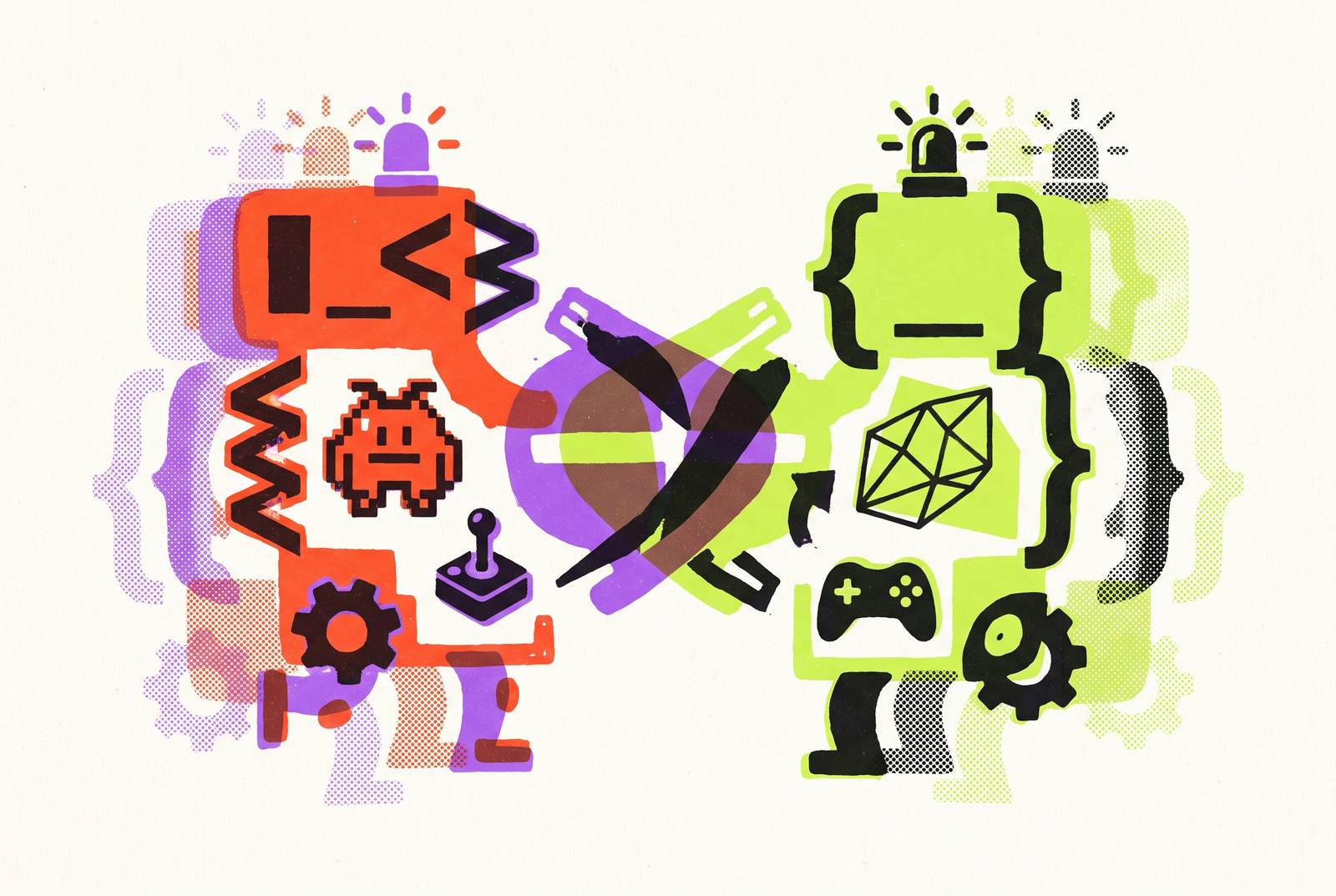
Most comparisons of GitHub Copilot and Tabnine are written for web and enterprise developers, optimized for how well each tool handles JavaScript, TypeScript, Python, and SQL. None of that answers what a game developer actually needs to know. A developer working in Godot is weighing something narrower and more specific: whether a tool understands GDScript well enough to be useful, whether it recognizes game-logic patterns like movement, signal wiring, collision response, and state machines, and whether it fits inside the actual working rhythm of a solo indie developer who has limited hours and no engineering team behind them. General comparisons skip all three questions because their authors are not writing for this audience.
The comparison also resolves faster than it would for a web developer, for a reason that has nothing to do with code quality. As of July 2026, Tabnine dropped its free and individual tiers entirely and became enterprise-only, with pricing starting at $39 per user per month billed annually. That single structural change removes Tabnine from the solo indie developer's set of realistic options before a single line of GDScript gets evaluated. Copilot, meanwhile, keeps a free tier for individuals alongside a paid Pro plan, which makes it the tool a solo developer can actually open and try without committing a budget line to it first. The rest of this piece works through the game-development-specific criteria that matter, and the pricing fork shapes how much weight the rest of the comparison should carry for most readers.
How each tool works inside a developer's editor
Both tools are IDE plugins. They deliver inline code completions as ghost text inside an existing editor, and neither one is a standalone game development environment, meaning neither replaces an editor or a scene system. Both run on cloud inference, requiring an active internet connection to generate suggestions.
Copilot adds Copilot Chat on top of its inline completions, powered by frontier models from a catalog that includes OpenAI, Anthropic, Google, xAI's Grok models, and Moonshot AI's Kimi K3, selectable across its supported clients. Chat allows natural-language code generation and queries that draw on context from an entire workspace, not just the file currently open. In June 2026, Copilot moved to usage-based billing through GitHub AI Credits across all its plans, which affects heavier agentic use more than it affects ordinary completion work, since code completions and Next Edit Suggestions remain included and do not consume credits.
Tabnine's pitch centers on control and customization over model breadth. It offers zero data retention: it does not store or train on a customer's code, and its models are trained on permissively licensed code specifically to limit IP risk. Tabnine's models are also switchable, including private and permissively-trained options. At the Enterprise tier, Tabnine supports two distinct capabilities: indexing a team's private repositories through retrieval-augmented generation for broader code awareness, and separately, fine-tuning a privately hosted model on that team's own codebase. These are built for organizations with a substantial, consistent internal codebase, not for a developer starting a new solo project from nothing.
General code completion performance and its limited weight for game developers
The quality gap between the two tools is widest on cutting-edge, fast-moving APIs, frameworks that have recently shipped breaking changes, because Copilot's training data tends to be fresher and catches those changes sooner. On stable, idiomatic APIs, where a language's patterns have held steady for years, that gap narrows substantially, since both tools have had ample exposure to the same well-worn examples.
Game logic built around mature patterns, character movement, collision response, signal wiring, state machines, behaves much more like a stable API than a cutting-edge framework. These patterns have been settled in Godot for years, holding steady across releases. That stability matters directly for this comparison: the headline quality gap that dominates general Copilot-versus-Tabnine writeups is a far less decisive factor for a game developer than it is for a web developer chasing the latest framework update. What decides the comparison for a Godot developer is how each tool performs specifically on GDScript, which the next section takes up directly.
GDScript support: where the comparison gets game-development-specific
Neither Copilot nor Tabnine was built for game development, and neither has native integration with the Godot editor. Both operate as external tools bolted onto an IDE, with no live access to the scene tree, the node hierarchy, or anything about the running state of a project.
Copilot has absorbed a large amount of public Godot code during training, and that exposure shows: it handles common GDScript patterns, movement scripts, signal connections, state machines, reasonably well. The trouble sits in the gaps around that strength. Copilot's training data contains far more Python, JavaScript, and C# than it does GDScript, and its suggestions sometimes borrow syntax or idioms from those languages that simply don't apply in GDScript. More consequential still, the tool conflates Godot 3 and Godot 4 syntax when a prompt doesn't specify which version it should be targeting.
That version confusion has a direct fix worth building into habit. Specifying the Godot version inside the prompt itself, writing "Godot 4.6 GDScript" rather than just "GDScript", prevents the assistant from defaulting to outdated Godot 3.x conventions. These confusions are specific and predictable: without specifying the version, the tool will suggest KinematicBody2D, a Godot 3 class, where CharacterBody2D is now correct, or it will reach for the old yield keyword where Godot 4 expects await. Neither mistake is subtle once a developer knows to look for it, but both will slip past someone unfamiliar with the Godot 3-to-4 transition.
Tabnine's theoretical advantage here is real on paper. Fine-tuning its local model against a studio's own private GDScript codebase could, in principle, close the quality gap for a team that has built up a large and internally consistent body of Godot code over time. But that capability sits behind the Enterprise tier at $39 per user per month, and it only works if a studio already has a substantial private codebase worth fine-tuning against. A solo developer starting a new project has neither the budget nor the codebase that would make this advantage available. The feature is credible, but it is built for a team that doesn't match the profile of most readers weighing this decision.
Pricing in 2026 for indie developers
As of July 2026, Tabnine's pricing starts at an enterprise minimum billed annually, with a higher agentic tier above that. There is no free tier and no individual plan at any price. GitHub Copilot, by contrast, offers a free tier for individuals and a Pro plan at $10 per month, with Copilot Business available at a higher per-user rate for teams that need it. For a solo indie developer, who typically carries a day job, works against a limited budget, and has no compliance officer reviewing vendor contracts, Tabnine's pricing takes it out of consideration on cost alone, independent of how its features compare on merit.
That positioning is not accidental. Tabnine's acquisition by Tricentis, and its stated pivot toward the Tricentis Agentic Quality Engineering Platform, confirms where the company is pointed: toward regulated organizations running formal quality engineering processes, not toward independent developers building games on their own time. There is one scenario where Tabnine's price holds up for a game developer: a well-funded studio with a strict IP or data-residency requirement, a large private GDScript codebase substantial enough to be worth fine-tuning against, and a compliance need that Copilot's cloud-only architecture genuinely cannot satisfy. That is a narrow set of conditions, and it describes a small studio operation, not the solo or small-team indie developer this comparison is written for. None of this makes Tabnine a poor tool. It means Tabnine's 2026 positioning is structurally mismatched with the solo and small-team developers this comparison is written for.
The pricing fork itself, Copilot's low individual monthly rate set against Tabnine's enterprise minimum, reflects a larger divergence in who each company is building for. Choosing between the two is, in part, a choice about whether to bolt AI assistance onto an existing patchwork of tools or to adopt something built from the ground up with solo creators in mind. Summer Engine's architecture takes the latter approach: code generation, asset creation, and deployment are orchestrated inside one engine rather than assembled from separate vendor relationships, so a developer building an indie game gets support for the whole process of shipping without stitching together a bespoke stack of subscriptions.
Privacy and deployment trade-offs for game developers
Tabnine's strongest argument has nothing to do with GDScript quality. It has to do with data control: zero retention, permissively trained models, and the option to fine-tune a privately hosted model rather than sending code to a third-party cloud service for inference. That argument is genuine and deserves a fair hearing.
For most indie game developers, though, the trade-off Tabnine is solving for doesn't apply to their situation. They are building games they intend to ship publicly. Their GDScript is not a proprietary trade secret sitting behind a legal wall, and they have no data-residency contract obligating them to keep code off third-party servers. Tabnine's privacy architecture becomes genuinely relevant in a narrower set of circumstances: a studio building proprietary engine extensions, licensed middleware, or IP under contract terms where code leakage carries real legal consequences. Those situations exist in the industry, but they describe a specific kind of studio work, not the default position of a solo or small-team developer building and shipping an original game. Readers in that narrower category should weigh Tabnine's privacy case seriously. Readers outside it are paying for a protection they don't need.
How MCP-connected AI agents are changing what "autocompletion" means for Godot developers
Both Copilot and Tabnine, for all their differences in pricing and model architecture, share one limitation that matters more than anything separating them: neither has live access to the Godot scene tree. Both see code files. Neither sees the running state of a game, the node hierarchy, or the scene graph as the editor understands it.
The Model Context Protocol, known as MCP, opens a different kind of architecture. An MCP server acts as a bridge between a Godot project and an external AI client, exposing scenes, nodes, input handling, and playtesting directly to the AI, going beyond limiting it to reading text files. The godot-mcp server, built by satelliteoflove, ships tools covering scene editing, input injection, and deterministic playtesting, giving an MCP-connected agent capabilities that neither Copilot nor Tabnine can reach as inline autocompletion plugins, since those plugins were built only to complete text, not to see inside a running project.
This isn't a mature, settled ecosystem yet, and it's worth being direct about that. Godot's MCP tooling is newer than comparable ecosystems elsewhere, so the surface of available tools and actions is smaller. GDScript's looser typing, compared to more statically typed languages, means agent calls through MCP fail more often than they would in an environment with stricter type guarantees. Godot's auto-reload behavior also demands care when an agent is making live edits to a project, since a reload at the wrong moment can interact unpredictably with in-progress changes. None of this makes Copilot or Tabnine obsolete. Inline autocompletion still earns its place in moment-to-moment coding flow, the small, constant suggestions that keep a developer from retyping boilerplate. But it does reframe what the real decision is for a Godot developer working in 2026. The more consequential decision may not be which autocomplete plugin to install, but which AI client to pair with an MCP server for the tasks that benefit from live project context.
What game developers need from their AI toolchain beyond code completion
Copilot and Tabnine are both, at their core, text tools. They write GDScript, C#, and C++, and they do that reasonably well within the limits already discussed. Neither produces a sprite, a tileset, a 3D model, a sound effect, a music track, or a texture. Code is one layer of building a game, and these two tools cover only that layer.
For a time-constrained indie developer, usually working a day job and building a game around it, that gap has a real cost. Managing a stack of separate subscriptions, a code assistant here, a 3D asset generator there, an audio tool somewhere else, adds coordination overhead that compounds with every additional tool in the chain. Summer Engine takes a different approach to that problem: it integrates AI assistance for code, 2D and 3D asset generation, audio, and publishing into a single desktop application available for macOS and Windows, so a developer isn't assembling and separately paying for each layer of the pipeline.
Inside the engine, Summer AI functions as an in-engine agent that handles game logic through conversation, which removes the premise, built into the entire Copilot-versus-Tabnine comparison, that a developer needs a separate IDE plugin at all for many of the tasks that plugin would otherwise handle. Summer Studio, the engine's generative asset studio, covers 2D art, 3D models, audio, music, and dialogue generation without requiring a developer to leave the development environment to find a separate tool for each one. Publishing to Steam and itch.io is built directly into the pipeline, though mobile exports for iOS and Android still require each platform's own toolchain and signing process, a step no engine can fully absorb away.
Code completion is one decision inside a much larger set of decisions about how a game gets made and shipped. Copilot and Tabnine answer the narrower question well enough for the developers each one is actually built for: Copilot for the solo or small-team developer who wants an accessible, no-commitment entry point, Tabnine for the funded studio with a compliance requirement and a codebase worth fine-tuning against. For a developer whose binding constraint is time rather than technical depth, adopting an integrated engine may resolve stack assembly before it becomes a decision at all, rather than adding another plugin to an existing stack.