One Subscription That Builds Ships and Sells Your Game Without a Secondary Tool Stack
An all-in-one AI subscription that builds games inside your engine, not in separate tools.
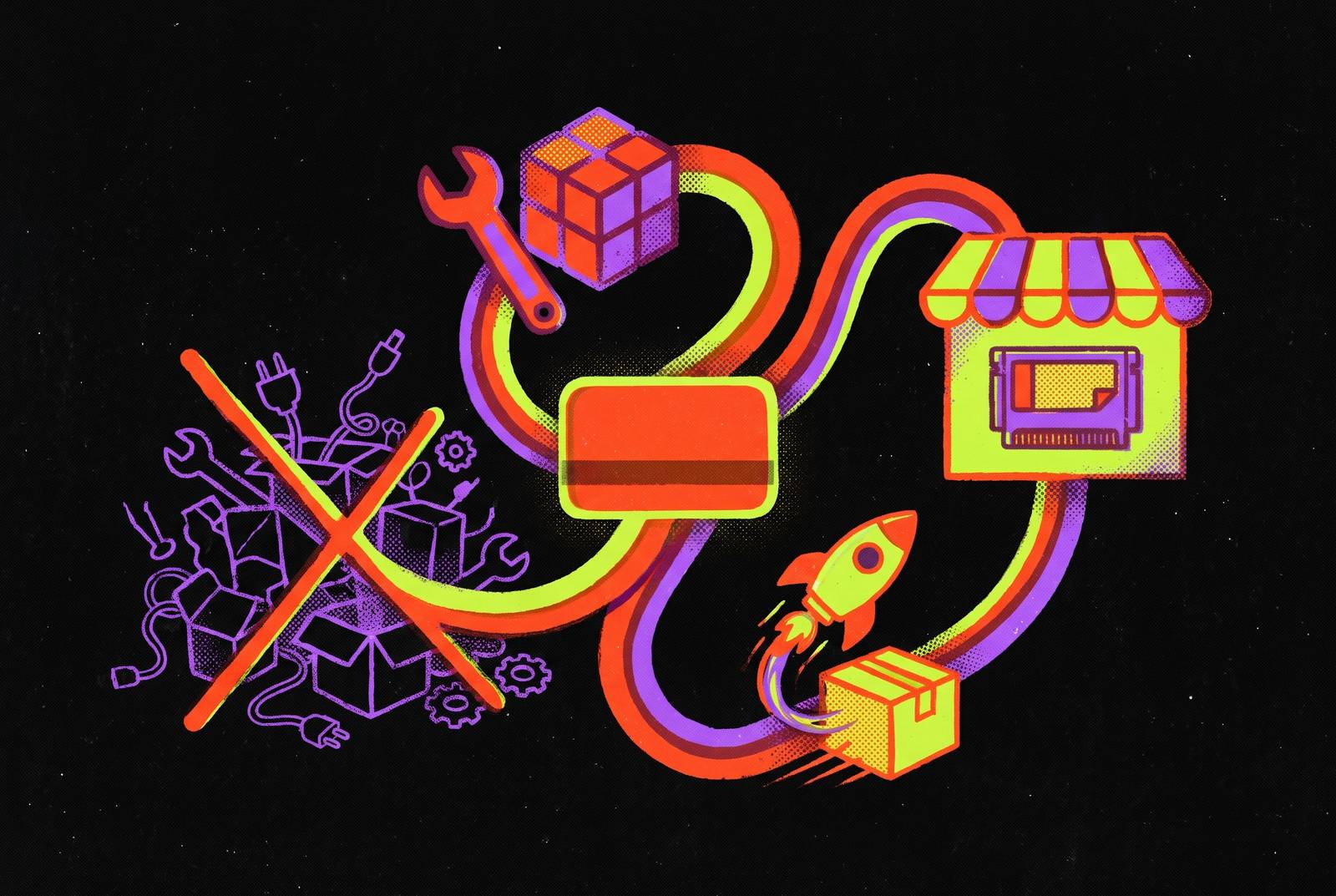
A unified AI game development subscription should build inside the project, generate assets the developer can use, and help publish the game after export. For developers targeting Steam, itch.io, and mobile, the decisive criteria are engine integration, a real submission workflow, and ownership of a portable project. One invoice is not enough. The value is removing the handoffs that interrupt development before a prototype becomes a product.
The real cost of the fragmented indie tool stack
The movement code is ready in one tab, and the character sprite is ready in another. Yet the next part of the session is spent exporting files, importing them into the engine, and correcting the connections between them. Nothing is playable yet. The developer still has to fix import paths, attach the script to a node, and wire the signal that makes the intended behavior happen.
That job costs money and takes attention away from the game. Each tool has its own login, pricing tier, export format, and mental model, while none of those boundaries corresponds to a creative decision about the game. A developer moving between them must keep the intended result in mind while translating it into each tool’s terms. The subscriptions buy individual capabilities. Even when every tool performs its assigned task well, the developer remains responsible for the handoff to the next one.
This is a structural tax. Knowing how to correct an import path does not make correcting it a useful interruption during a design session. Better generated code still has to be put into a scene that works. The fragmented stack consumes attention precisely where an idea needs sustained development, between the initial request and the first playable result.
Why AI outside the engine always creates a paste-and-wire step
A separate chat assistant can write correct code without being able to put it to work inside the project. Its output ends where engine work begins. The developer must create or select the relevant objects, attach scripts, configure their dependencies, and establish the connections the code expects. Improving the model can improve the script, but it does not by itself remove that boundary. The architecture still assigns the integration work to the person.
An AI operating inside the engine can complete a different unit of work. Rather than only writing a movement script, it can attach that script, set up the physics body and collision shape, and bind the input. The developer can play the resulting build. This distinction changes what completion means, from a plausible file to a working behavior within the project.
A plain chat window that cannot see the scene tree must work from descriptions it is given or guess node names and signal connections. Those guesses leave things to fix even when the programming logic itself works. Access to the scene tree and debugger narrows that gap. For practical engine work, a weaker model with the right context and ability to act can outperform a stronger model isolated in another window, because completing the change is the bottleneck.
What a unified subscription actually needs to cover, job by job
A subscription that replaces separate tools must cover their jobs at production quality. Code generation is only the beginning. The engine work includes building scenes, running the game, and fixing what fails, so the AI must take part in the runtime loop as well as supply scripts. That is where consolidation removes the most friction, because code and scene-building are among the slowest parts of indie development. A common login does not provide that integration.
Asset coverage needs equally concrete standards. For 2D work, an image model must be paired with a dedicated asset generator that supports sprites, tilesets, UI, and placeholders with transparent backgrounds and consistent sizing. For 3D work, props, characters, and kitbash bases need to be in clean formats that the engine imports natively. Audio needs its own generation tools for music beds and sound effects. Each job has its own requirements, and access to one generator does not establish that the subscription can perform the others.
NPCs and dialogue deserve explicit attention because barks, branching lines, and behavior are often missing from an offering described as unified. Shipping also needs a careful distinction. Store copy, patch notes, and marketing text are available from chat models at the free tier, making text generation alone a low-value substitute for a publishing workflow. Art and audio generation have per-generation compute costs no matter how they are packaged. The honest standard is therefore not that one subscription makes every operation costless, but that it connects those operations to the scene tree, debugger, and shipping process instead of presenting a fragmented stack on a single invoice.
How the build-generate-publish loop works when everything shares one context
A single-afternoon workflow starts with a genre template. That choice gives the AI a foundation. Instead of spending the session rebuilding basic systems, the developer can focus the request on what distinguishes the game. The AI first builds a small playable scaffold by building the scene and attaching the behavior inside it.
Once the basic loop runs, the character’s style can be described within the same session. That description can inform both the character’s behavior and the generated sprite, connecting what the character does with what it looks like. The asset goes into the project without having to be exported and imported separately. If the behavior fails, the AI can read the debugger in the context of the scene it has been changing. The developer does not have to reconstruct that context in another conversation before work can continue.
A scene change, an asset, and a runtime correction belong to the same project context, so each result becomes the starting point for the next request. When the build is ready for publishing work, store copy and submission preparation can draw on that same session. This is the practical basis for reducing an idea-to-playable loop from a day to an afternoon.
That speed has a firm limit, however. AI can build the scaffold and generate assets, but judging how fun the game is belongs to the developer. Time saved on putting the parts together leaves more time for playtesting, adjusting the core loop, and deciding whether the game is worth releasing. A connected publishing workflow can help move a finished build toward market, but it cannot replace the judgment that the build is ready.
The incremental build habit that keeps AI-assisted projects from breaking silently
The new speed is best spent on verified progress within the existing scope. Generating changes faster than they can be tested poses the main risk. As unchecked changes accumulate, silent bugs become harder to isolate because the developer no longer knows which increment introduced the failure. A unified tool makes this discipline more important. The interruptions of a fragmented stack once imposed involuntary pauses, and removing them also removes opportunities to notice drift.
The first prompt should describe the smallest playable form: one player, one action, and one condition that ends a round. Story, art style, menus, and sound come after that loop runs. This gives the developer a clear object to evaluate before more systems compete for attention. It also keeps the initial request focused on a result that can be played rather than a collection of features that can only be inspected.
“Add a double jump” is followed by a playtest and confirmation that it works. Only then does “Make enemies drop a coin when killed” become the next increment. Each request produces a behavior with a clear test, rather than a broad revision whose success is difficult to judge.
AI disclosure requirements on Steam and itch.io as of 2026
Steam requires disclosure of all player-facing AI content as of 2026 through the Steamworks Content Survey. itch.io mandates disclosure for asset pack creators, while disclosure for games is voluntary and strongly encouraged. The distinction is important for submission planning. Neither platform imposes an outright prohibition on AI-generated assets, but their disclosure obligations are not interchangeable.
This belongs in planned submission preparation. A pipeline that omits it returns another integration job to the developer at the last stage of production. The developer must then assemble the information needed for the relevant platform separately from the work that produced the game. When disclosure is built into the publishing workflow, it has its own step.
Asset provenance connects that step to the earlier generation work. A developer using separate tools must track which assets came from which tool and under what license. Generating the assets in the same session simplifies that disclosure and license audit by reducing the sources that must be reconciled. It does not make the obligation disappear. A unified workflow provides a cleaner path to completing that obligation.
How do you move from game export to revenue on Steam, itch.io, and mobile?
Finishing a game and launching it are different jobs. A finished build supplies the product, while the launch sequence determines how that product enters the market. An export is therefore not evidence of built-in deployment. For a subscription claiming to support Steam, itch.io, and mobile, the relevant question is what happens after the game leaves the runtime. Store preparation, submission checklists, and a project that can move to the intended destination distinguish a publishing pipeline from an export button.
Steam’s discovery system rewards early wishlist momentum, so its store page should go live well before release, ideally with a teaser trailer. A pipeline built into the engine can bring store copy, trailer generation, and submission checklists into the same session as the final build. The store page need not wait for that final session.
Mobile belongs in the portability assessment, but exportability alone does not establish a built-in mobile submission workflow. A tool’s publishing claim should be checked for each destination. Without that distinction, a subscription can appear to cover the whole release process while still leaving the developer to assemble a secondary publishing stack.
Ownership is the final test of that claim. The developer needs an exported project that can be taken to market. A project trapped in a browser-only tool or proprietary format, with no usable path out, cannot serve that purpose across Steam, itch.io, and mobile. Integration is worth paying for when it removes handoffs and leaves the developer free to ship. The subscription then supports more than a prototype inside a service. It supports a portable product the developer owns and can sell.